Western Home Decor Ideas for a Cozy Rustic Living Space
There’s something undeniably captivating about a home that feels warm, welcoming, and deeply connected to nature. Whether it’s the rich texture of aged leather, the beauty of reclaimed wood, or the charm of handcrafted accents, western home decor brings together comfort, character, and timeless style in a way few design trends can.
Inspired by the rugged landscapes of the American West, this decorating style blends rustic materials, earthy colors, and authentic craftsmanship. It creates spaces that feel lived-in, inviting, and full of personality. From sprawling ranch houses to modern suburban homes, western-inspired interiors continue to attract homeowners looking for a balance between elegance and practicality.
The appeal of this design approach goes far beyond aesthetics. It celebrates heritage, craftsmanship, and a connection to the outdoors while offering a cozy retreat from the fast pace of modern life. Whether you’re redesigning an entire home or adding a few rustic accents, understanding the principles behind this style can help you create a space that feels both stylish and authentic.

What Is Western Home Decor?
Definition and Core Characteristics
Western home decor is an interior design style inspired by the landscapes, traditions, and lifestyle of the American West. It incorporates natural materials, rustic textures, handcrafted furnishings, and warm color palettes that reflect ranch living and frontier heritage.
Key characteristics include:
- Natural wood finishes
- Leather furniture and accessories
- Earth-tone color schemes
- Rustic metal accents
- Southwestern patterns
- Vintage-inspired décor
- Nature-inspired artwork
- Handcrafted details
The result is a comfortable and welcoming environment that feels timeless rather than trendy.
Why Homeowners Love This Style
One reason western-inspired interiors remain popular is their versatility. They can be adapted to traditional ranch homes, modern farmhouses, cabins, and even contemporary urban spaces.
This design style encourages comfort while still delivering visual impact. Every element tells a story, creating rooms that feel personal and authentic.
The History Behind Western Interior Design
Roots in Ranch Life
The origins of western home decor can be traced to ranches and homesteads throughout the American frontier. Early settlers relied on durable, practical furnishings crafted from available materials such as wood, leather, and iron.
Functionality was essential, but over time these practical elements developed into a recognizable design aesthetic admired for its rugged beauty.
Modern Interpretations
Today’s western interiors blend traditional influences with modern design principles.
Contemporary western spaces often feature:
- Cleaner furniture lines
- Open floor plans
- Neutral color palettes
- Mixed textures
- Refined rustic details
This updated approach allows homeowners to enjoy western charm without creating an overly themed appearance.
Essential Elements of Western Home Decor
Natural Wood Features
Wood serves as one of the defining materials in western-inspired interiors.
Popular applications include:
- Exposed ceiling beams
- Hardwood flooring
- Reclaimed wood furniture
- Rustic shelving
- Wood accent walls
Natural wood introduces warmth and texture while reinforcing the connection to nature.
Leather Accents
Leather is another signature feature frequently found in western home decor.
Common uses include:
- Sofas
- Recliners
- Dining chairs
- Ottomans
- Decorative pillows
The material develops character over time, making it both beautiful and practical.

Metal and Iron Details
Iron accents contribute to the rugged elegance associated with western design.
Examples include:
- Light fixtures
- Cabinet hardware
- Bed frames
- Decorative sculptures
- Wall décor
These elements provide visual contrast against softer materials.
Southwestern Patterns
Many western interiors incorporate Southwestern-inspired textiles.
Popular patterns feature:
- Geometric shapes
- Tribal motifs
- Earth-tone colors
- Handwoven textures
These patterns add visual interest while maintaining authenticity.
Creating a Western Living Room
Start with Statement Furniture
The living room often serves as the heart of the home.
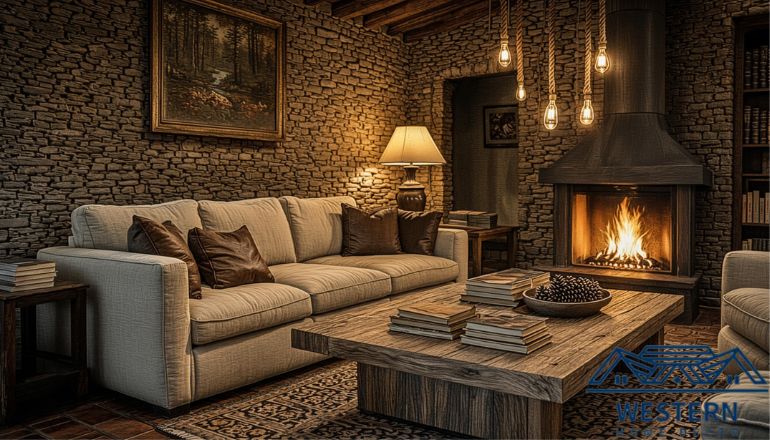
A western-inspired living room typically includes:
- Leather seating
- Solid wood coffee tables
- Rustic side tables
- Comfortable accent chairs
- Natural fiber rugs
These foundational pieces establish the room’s overall character.
Layer Textures for Warmth
Texture plays a crucial role in successful western design.
Consider layering:
- Wool blankets
- Cowhide rugs
- Leather cushions
- Linen curtains
- Woven baskets
Combining different textures creates depth and visual appeal.
Add Meaningful Decorative Pieces
Decorative accents help personalize the space.
Popular choices include:
- Vintage lanterns
- Rustic clocks
- Framed landscape photography
- Antler-inspired décor
- Handcrafted pottery
Choose items that reflect your personality rather than filling every available surface.
Designing a Western-Inspired Bedroom
Focus on Comfort
Bedrooms should feel restful and inviting.
Western-inspired bedroom essentials include:
- Wooden bed frames
- Layered bedding
- Rustic nightstands
- Soft lighting
- Natural textiles
Comfort should always remain a top priority.
Incorporate Warm Colors
The color palette significantly influences atmosphere.
Ideal bedroom shades include:
- Warm beige
- Camel brown
- Rust red
- Sage green
- Soft cream
These colors create a relaxing and grounded environment.
Use Rustic Wall Décor
Wall décor helps reinforce the overall theme.
Consider:
- Framed ranch photography
- Wooden signs
- Nature-inspired artwork
- Vintage maps
- Metal wall sculptures
The goal is to create interest without overwhelming the room.

Western Home Decor for Kitchens and Dining Areas
Rustic Kitchen Features
The kitchen offers many opportunities to introduce western character.
Popular elements include:
- Open wood shelving
- Farmhouse sinks
- Iron hardware
- Wooden bar stools
- Vintage-inspired lighting
These details create a welcoming gathering space.
Dining Room Styling Ideas
Dining rooms benefit from warmth and authenticity.
Decorating ideas include:
- Large wooden dining tables
- Leather dining chairs
- Wrought iron chandeliers
- Seasonal centerpieces
- Handmade serving pieces
These additions encourage comfortable entertaining.
Choosing the Right Color Palette
Earth-Inspired Neutrals
Color serves as the foundation of western interior design.
Common neutral shades include:
- Sand
- Taupe
- Cream
- Stone gray
- Warm brown
These colors create a calm backdrop for decorative accents.
Accent Colors That Work
Accent colors introduce personality without disrupting harmony.
Popular options include:
- Deep navy
- Burnt orange
- Forest green
- Brick red
- Turquoise
Used thoughtfully, these colors enhance the western aesthetic.
Decorating Small Spaces with Western Style
Keep It Simple
Small spaces benefit from restraint.
Focus on:
- Quality over quantity
- Functional furniture
- Limited color palettes
- Strategic décor placement
- Open floor space
A few carefully chosen pieces often create greater impact than excessive decoration.
Emphasize Vertical Design
Vertical elements make rooms feel larger.
Examples include:
- Tall bookshelves
- Vertical artwork
- Hanging plants
- Floor-to-ceiling curtains
- Statement lighting
These features draw the eye upward and increase visual interest.
Mixing Western and Modern Design
Why the Combination Works
Many homeowners prefer a balanced approach that combines rustic charm with contemporary sophistication.
This fusion creates spaces that feel:
- Current
- Comfortable
- Functional
- Stylish
- Timeless
The contrast between sleek and rustic elements often produces the most interesting interiors.
Best Ways to Blend Styles
Successful combinations include:
- Modern sofas with rustic tables
- Minimalist lighting with reclaimed wood
- Neutral palettes with western accents
- Contemporary artwork alongside vintage pieces
- Clean architectural lines with natural textures
Balance is the key to achieving a cohesive look.
Seasonal Decorating Ideas
Spring and Summer
Warmer months call for lighter styling.
Consider adding:
- Fresh greenery
- Lightweight textiles
- Natural woven accessories
- Bright accent colors
- Seasonal flowers
These elements keep interiors feeling fresh and airy.
Fall and Winter
Cooler seasons invite additional warmth.
Popular updates include:
- Chunky knit blankets
- Rich earth tones
- Rustic candles
- Layered textiles
- Seasonal wreaths
These additions enhance comfort and coziness.
Common Mistakes to Avoid
Overusing Themed Décor
One of the biggest mistakes is turning a western-inspired home into a themed space.
Avoid excessive use of:
- Cowboy imagery
- Novelty signs
- Overly decorative accessories
- Repetitive motifs
Subtlety creates a more sophisticated result.
Ignoring Balance
Too much wood, leather, or dark color can make interiors feel heavy.
Balance these materials with:
- Soft fabrics
- Natural light
- Neutral walls
- Open space
- Lighter accents
This approach keeps rooms feeling comfortable and inviting.
FAQ
What is western home decor?
Western home decor is an interior design style inspired by ranch living, natural materials, rustic craftsmanship, and the landscapes of the American West.
What colors work best in western interiors?
Earth tones such as brown, beige, cream, rust, sage green, and warm gray are commonly used.
Can western design work in modern homes?
Yes. Many homeowners successfully combine western elements with contemporary furnishings and clean architectural lines.
Is leather necessary for western decorating?
While leather is a signature material, it is not required. Similar warmth can be achieved through textured fabrics and natural materials.
What type of wood works best for western décor?
Reclaimed wood, oak, pine, walnut, and distressed finishes are all popular choices.
How can I decorate on a budget?
Focus on affordable accents such as throw pillows, rustic wall art, woven baskets, and vintage-inspired accessories.
Does western style work in apartments?
Absolutely. Small-scale furniture, neutral palettes, and a few carefully chosen rustic accents can create western charm in limited spaces.
What is the difference between western and farmhouse décor?
Farmhouse décor focuses on rural simplicity and vintage charm, while western style incorporates ranch influences, rugged materials, and Southwestern elements.
Conclusion
The enduring appeal of western home decor lies in its ability to combine comfort, craftsmanship, and timeless beauty. By incorporating natural materials, warm colors, and thoughtfully chosen furnishings, you can create a home that feels welcoming, authentic, and uniquely personal.
Whether you’re embracing a full ranch-inspired transformation or introducing a few rustic accents, this style offers endless opportunities to create spaces that celebrate both tradition and modern living. The best western interiors aren’t about following strict rules—they’re about creating a home that feels connected to nature, rich in character, and genuinely comfortable every day.