Mexican Home Decor Ideas for a Warm, Colorful Home Style
A beautiful home does not always whisper. Sometimes, it sings through color, texture, handmade details, and little imperfections that make a room feel alive. That is the charm of mexican home decor: it brings warmth, story, and personality into everyday spaces without making them feel staged.
This style matters because people are craving homes that feel less cold and more human. A Mexican-inspired room can make a kitchen feel cheerful, a patio feel welcoming, and a living room feel layered with memory. It is not about copying one exact look. It is about blending earthy materials, expressive color, craftsmanship, and comfort in a way that feels natural to your home.
The best part is that you can bring this look into almost any space. A full hacienda-style renovation is not required. Even a Talavera tile backsplash, a painted wooden cabinet, a handwoven rug, or a few clay planters can completely change the mood of a room.
To get the look right, the secret is balance. Too many bright pieces can feel chaotic, while too little color can miss the soul of the style. The goal is to create a home that feels collected, warm, grounded, and personal.
What Makes Mexican-Inspired Interiors So Special?
Mexican-inspired interiors are known for their expressive personality. They often combine bold color, natural textures, handmade objects, and architectural details that feel rooted and welcoming. Instead of looking overly polished, the style celebrates character.
You will often see terracotta floors, painted tiles, carved wood, woven blankets, embroidered pillows, clay pottery, wrought iron, leather, rustic beams, and lush plants. These elements work because they create contrast: smooth tile beside rough wood, vivid textiles against white plaster, and earthy pottery beside green plants.
Definition: What Is mexican home decor?
mexican home decor is a warm interior style inspired by Mexico’s craft traditions, colors, materials, architecture, and everyday hospitality. It often includes artisan ceramics, woven textiles, rustic wood furniture, terracotta, hand-painted tiles, folk art, plants, and rich color palettes.
The style can be traditional, rustic, modern, bohemian, coastal, or minimal depending on how it is arranged. A home does not need to look like a museum or restaurant to carry the feeling. It only needs honest materials, thoughtful color, and a sense of comfort.
Start With a Warm and Earthy Foundation
The easiest way to build this style is to begin with the base of the room. Walls, floors, and large furniture pieces should feel grounded before smaller colorful accents are added. This helps the room stay calm even when patterns and bold colors are introduced.
Warm neutrals work beautifully as a foundation. Think creamy white, warm beige, sand, clay, soft taupe, stone, and sun-washed plaster. These shades allow colorful textiles, tiles, and pottery to stand out without overwhelming the room.
Use Terracotta, Clay, and Stone Tones
Terracotta is one of the most recognizable colors in Mexican-inspired spaces. It feels earthy, sunbaked, and timeless. You can use it through floor tiles, planters, vases, wall paint, cushions, or decorative bowls.
Clay and stone tones also bring a natural softness. A room with warm white walls, terracotta pots, a jute rug, and a rustic wooden table can already feel inviting before any bright colors are added.
Let Imperfection Add Character
This style does not need everything to be perfectly smooth or matching. Slightly uneven tiles, hand-painted ceramics, aged wood, and hammered metal all add charm. These details make the space feel lived-in rather than overly manufactured.
That does not mean the room should feel messy. The best version is edited but not sterile. Choose pieces with character, then give them enough space to be noticed.
Color Palettes That Bring the Style to Life
Color is one of the strongest features of mexican home decor, but it should still feel intentional. The most successful rooms usually combine earthy base colors with a few strong accent shades.
Popular accent colors include cobalt blue, turquoise, mustard yellow, deep red, burnt orange, cactus green, fuchsia, and warm coral. These colors work well because they echo ceramics, textiles, flowers, markets, painted doors, and sunlit architecture.
Classic Color Combination Ideas
A classic palette might include warm white walls, terracotta flooring, dark wood furniture, cobalt blue tiles, and green plants. This combination feels traditional but still fresh.
For a brighter look, try turquoise, yellow, orange, and pink in textiles and artwork. For a calmer look, use clay, cream, olive green, walnut wood, and small touches of blue. The key is to repeat colors in small ways so the room feels connected.
How to Use Bold Color Without Overdoing It
If bold color makes you nervous, start small. Add a colorful runner in the kitchen, patterned pillows in the living room, or painted ceramic plates on open shelves. These details are easy to change but still create impact.
One helpful rule is to choose one hero color and two supporting colors. For example, cobalt blue can be the hero, while terracotta and cream support it. This keeps the design lively without feeling random. You may also read this: Home Decor Group Ideas for Beautiful and Inspired Spaces.
Talavera Tiles and Ceramic Accents
Hand-painted tiles are one of the most loved features in Mexican-inspired interiors. They can appear on stair risers, backsplashes, bathroom walls, tabletops, fireplaces, fountains, and outdoor kitchens.
Talavera-style tiles are especially popular because of their detailed patterns and bright colors. They add instant personality, even when used in small amounts. A simple white kitchen can feel completely different with a colorful tile backsplash or a tiled niche.
Where to Use Tile for Maximum Impact
Tile works best where it feels useful and decorative at the same time. A kitchen backsplash is practical, easy to clean, and visually powerful. Bathroom vanities, shower niches, and mirror frames are also great places to add patterned tile.
For a smaller commitment, try tile coasters, a tiled tray, a ceramic lamp base, or a small tiled side table. These pieces bring the same spirit without permanent installation.
Mixing Tile Patterns Tastefully
Pattern mixing is common in this style, but it needs rhythm. If you combine several tile designs, keep a shared color palette. Blue-and-white patterns can mix easily because the colors connect them.
If the tiles are very colorful, keep surrounding surfaces simple. Plain walls, wood shelves, and neutral counters help the tile become the focal point instead of competing with everything else.
Furniture With Rustic Soul
Furniture in this style usually feels sturdy, warm, and honest. Heavy wood tables, carved cabinets, leather chairs, woven benches, and painted storage pieces all fit beautifully.
You do not need every furniture piece to be rustic. In fact, mixing old and new can make the home feel more natural. A modern sofa can work well with a carved coffee table, a woven rug, and ceramic lamps.
Choose Wood With Warmth
Dark wood, reclaimed wood, pine, walnut tones, and distressed finishes all suit this look. A dining table with visible grain or a cabinet with carved details can become the anchor of the room.
Avoid making every piece dark and heavy, especially in small spaces. Balance large wooden items with light walls, colorful fabrics, plants, and open space.
Painted Furniture Adds Personality
Painted furniture is a beautiful way to bring charm into a room. A turquoise console, red cabinet, blue nightstand, or yellow pantry door can become a joyful focal point.
If you prefer a softer look, choose muted versions of these colors. Dusty blue, aged green, faded red, and warm ochre feel colorful without being too loud.
Textiles That Make the Room Feel Collected
Textiles are one of the easiest ways to add warmth. Blankets, rugs, runners, pillows, curtains, and wall hangings can shift a room from plain to expressive very quickly.
Look for woven textures, embroidered details, stripes, geometric patterns, and natural fibers. These pieces add softness and help balance harder surfaces like tile, plaster, wood, and iron.
Rugs, Runners, and Blankets
A patterned runner in a hallway or kitchen instantly adds movement. A woven rug under a coffee table can define the seating area. A colorful blanket folded over a sofa gives the room a relaxed, welcoming feeling.
For a more subtle room, choose textiles with earthy colors and simple stripes. For a bolder room, use bright woven patterns and repeat one or two colors elsewhere.
Pillows and Upholstery
Pillows are perfect for experimenting with color. Mix solids, stripes, embroidery, and small patterns, but keep the palette connected. A sofa with cream upholstery can handle bold pillows beautifully.
Leather and woven upholstery also fit the style well. A leather accent chair, cane bench, or woven stool adds texture without needing a lot of extra decoration.
Wall Decor, Folk Art, and Handmade Details
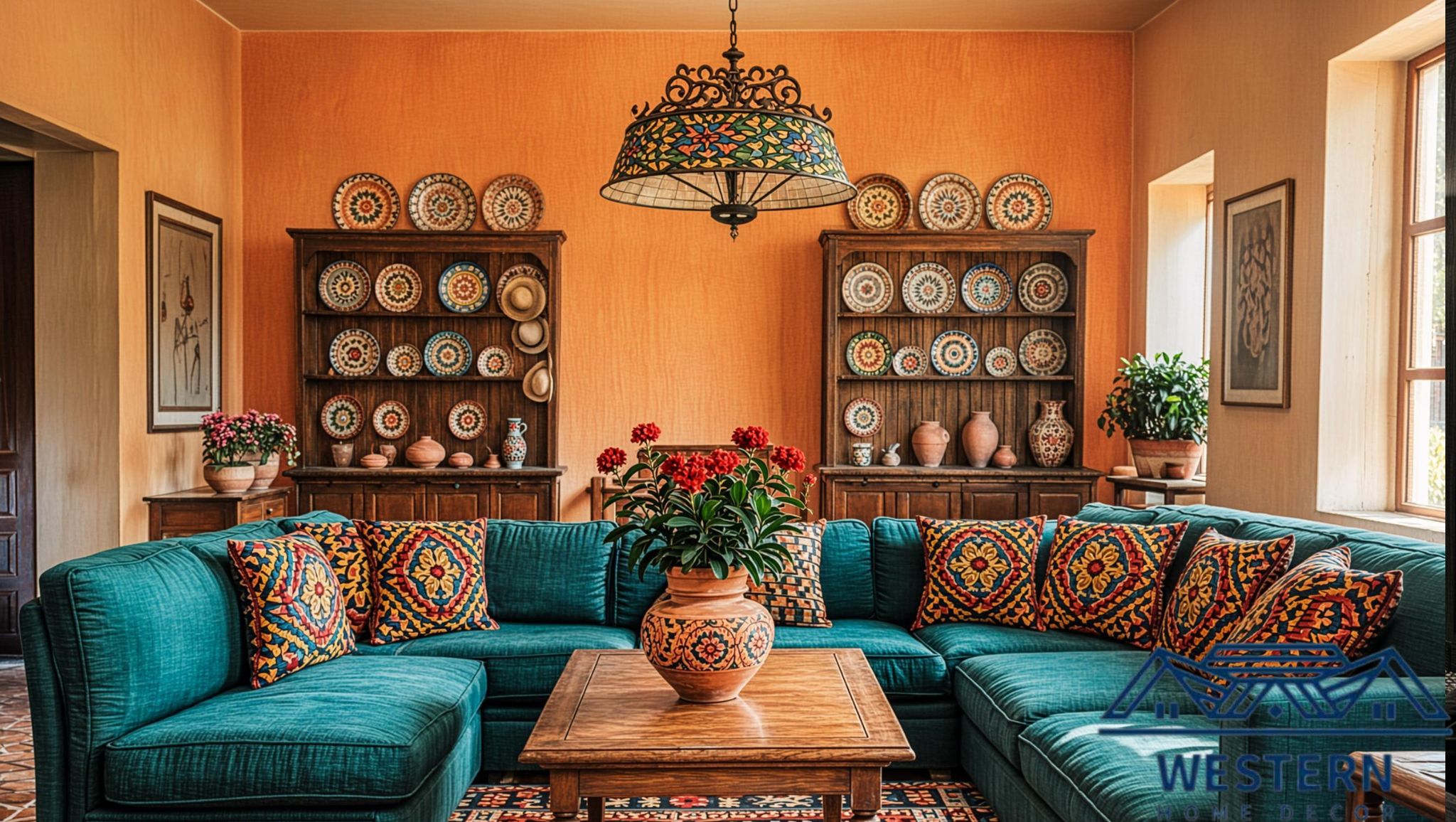
Walls are a wonderful place to show personality. Mexican-inspired wall decor can include ceramic plates, woven baskets, folk art, mirrors, painted crosses, carved wood, framed textiles, and colorful artwork.
The important thing is to avoid turning the wall into a costume. Choose pieces that feel meaningful, not just themed. One beautiful handmade mirror may have more impact than ten generic decorations.
Ceramic Plate Walls
A ceramic plate wall can look stunning in a dining room, kitchen, hallway, or breakfast nook. The plates can match perfectly or vary in color and pattern. To keep the arrangement elegant, plan the layout before hanging.
A simple approach is to use one large plate in the center with smaller plates around it. Another option is a clean horizontal row above a console or buffet.
Mirrors and Ironwork
Wrought iron mirrors, punched tin frames, and carved wood mirrors work beautifully in this style. They reflect light while adding texture and shape.
Mirrors are especially useful in small rooms because they make the space feel brighter and more open. Place one across from a window, near an entryway, or above a rustic console.
Mexican Home Decor for the Kitchen
The kitchen is one of the best places to use mexican home decor because the style naturally suits gathering, cooking, color, and warmth. Even a small kitchen can feel lively with the right details.
Start with useful beauty. Display ceramic bowls, clay pots, wooden cutting boards, woven baskets, and colorful dishware. These items are decorative, but they also belong in a kitchen, so the space feels authentic.
Open Shelves With Character
Open shelves are perfect for showing handmade ceramics, glass jars, cookbooks, small plants, and serving pieces. Keep the arrangement practical so it does not feel like a display that nobody can touch.
Group items by color or material. For example, place white ceramics together, then add a few blue patterned pieces and a clay pot for contrast.
Backsplashes, Islands, and Breakfast Corners
A tile backsplash can become the star of the kitchen. If a full backsplash feels too bold, tile only the area behind the stove or sink. A breakfast corner can also carry the style through cushions, a small rug, art, and pendant lighting.
Wooden stools, iron pendant lights, and terracotta planters can complete the look without making the room feel crowded.
Living Room Ideas With Warmth and Color
The living room should feel comfortable first. A Mexican-inspired living room often feels relaxed, layered, and friendly. It invites people to sit down, talk, and stay awhile.
Begin with a comfortable sofa, a warm rug, and a strong coffee table. Then add color through pillows, pottery, wall art, and plants. This creates a room that feels stylish but still easy to live in.
Create a Strong Focal Point
A focal point helps the room feel organized. It could be a fireplace, a large piece of art, a carved cabinet, a tiled coffee table, or a gallery of ceramic plates.
Once the focal point is chosen, keep surrounding pieces supportive. Too many competing focal points can make the room feel busy.
Add Greenery and Natural Life
Plants are essential to the feeling of warmth. Cactus, succulents, palms, snake plants, and trailing plants all work well. Place them in clay pots, painted ceramic planters, or woven baskets.
Greenery softens bold color and adds life to rustic materials. Even one large plant in a corner can make the room feel complete.
Bedroom Ideas That Feel Calm and Soulful
A bedroom inspired by this style does not need to be extremely bright. It can be calm, earthy, and restful while still carrying character.
Use warm white or clay-colored walls, a wooden bed, woven bedding, soft lighting, and a few colorful accents. A single embroidered pillow or patterned throw can be enough.
Bedding and Headboards
A carved wood headboard, woven headboard, or painted headboard can add personality. Keep bedding breathable and layered. Linen, cotton, and textured blankets work better than overly shiny fabrics.
If you like color, add it at the foot of the bed through a striped blanket or woven coverlet. This keeps the room peaceful while still expressive.
Nightstands and Lighting
Nightstands do not need to match perfectly. A painted table on one side and a rustic wood table on the other can feel charming if the colors and proportions work together.
For lighting, choose ceramic lamps, punched metal lanterns, woven shades, or warm wall sconces. Soft lighting makes the space feel intimate and restful.
Bathroom Ideas With Tile and Texture
Bathrooms are ideal for patterned tile, painted mirrors, clay accessories, and warm metal finishes. Even a tiny powder room can become memorable with one bold design choice.
A tiled vanity wall, colorful sink, rustic mirror, or terracotta floor can bring the style to life. Keep the rest of the bathroom simple so the main feature can shine.
Small Bathroom Updates
For renters or smaller budgets, use a colorful shower curtain, woven baskets, ceramic soap dish, patterned hand towels, and a painted mirror. These changes are simple but effective.
Plants also work beautifully in bathrooms with enough light. A small cactus, trailing pothos, or leafy plant can soften tile and stone.
Outdoor Spaces and Patios
Mexican-inspired outdoor spaces are full of charm because the style naturally connects with sun, plants, clay, tile, and gathering. A patio, balcony, or courtyard can become one of the most inviting places in the home.
Use terracotta pots, painted planters, string lights, woven chairs, rustic tables, and colorful cushions. Add herbs, succulents, flowering plants, or climbing greenery to create a relaxed atmosphere.
Courtyard Feeling at Home
Even without a real courtyard, you can create the feeling with potted plants, a small fountain, outdoor tiles, lanterns, and comfortable seating. The goal is to make the space feel sheltered and peaceful.
If the patio is small, use vertical planters, wall hooks, folding chairs, and a narrow bench. A few thoughtful pieces are better than crowding the area.
Modern Ways to Use Mexican Home Decor
A modern home can still use mexican home decor beautifully. The trick is to simplify the palette and choose fewer statement pieces. Instead of filling the room with many patterns, let one handmade item stand out.
For example, a minimalist dining room can include a rustic table, white walls, black chairs, and a colorful ceramic pendant. A modern living room can use a neutral sofa with one woven rug and a few clay vases.
Modern Rustic Balance
Modern rustic balance means mixing clean lines with warm materials. Use simple furniture shapes, then add handmade texture through pottery, textiles, wood, and plants.
This approach feels fresh because it respects tradition without making the room feel old-fashioned.
Common Mistakes to Avoid
The biggest mistake is using too many themed items at once. Sombrero wall art, fake cactus signs, overly bright colors, and restaurant-style props can make the room feel less authentic.
Another mistake is ignoring comfort. A room can have beautiful colors and still feel uncomfortable if the seating is stiff, the lighting is harsh, or the layout is awkward.
Keep It Collected, Not Cluttered
A collected room feels layered over time. A cluttered room feels like everything was bought in one shopping trip. Choose fewer pieces with better texture, better color, and better meaning.
Leave breathing room around special items. A handmade vase looks more beautiful when it is not surrounded by too many small objects.
Respect the Craft
Many pieces in this style are inspired by real craft traditions. Whenever possible, buy handmade, fair-trade, vintage, or artisan-made items. This brings more authenticity into the home and supports the people who keep these skills alive.
Even if you are decorating on a budget, choose thoughtfully. One real handmade piece can bring more soul than several mass-produced copies.
FAQ
What colors work best for Mexican-inspired interiors?
Warm white, terracotta, clay, sand, cobalt blue, turquoise, mustard yellow, deep red, green, and burnt orange all work well. Use earthy tones as the base and brighter colors as accents.
Is mexican home decor only for rustic homes?
No. It can work in rustic, modern, bohemian, coastal, farmhouse, or minimalist homes. The key is choosing the right amount of color, texture, tile, and handmade detail for your space.
How can I add this style on a small budget?
Start with textiles, planters, ceramic bowls, framed art, painted furniture, or a colorful runner. These items can change the mood without requiring renovation.
Are Talavera-style tiles good for kitchens?
Yes, they are popular for backsplashes, stove areas, sinks, and decorative accents. If you want a subtle look, use them in one small area instead of covering every wall.
Can I mix Mexican-inspired decor with modern furniture?
Yes. Modern furniture can actually make handmade pieces stand out more. Try pairing a simple sofa or dining table with colorful ceramics, woven textiles, and warm wood accents.
What materials are most common in this style?
Common materials include wood, clay, terracotta, ceramic tile, iron, leather, cotton, wool, jute, stone, and natural fibers. These materials give the home warmth and texture.
How do I avoid making the room look too busy?
Limit the color palette, repeat colors throughout the room, and choose one or two main patterns. Keep larger furniture pieces simple if the textiles and tiles are bold.
What is the easiest room to decorate first?
The kitchen or living room is usually the easiest. Kitchens work well with tile, ceramics, and wood, while living rooms are easy to update with rugs, pillows, plants, and wall decor.
Conclusion
A home feels most beautiful when it tells a story. Mexican-inspired interiors do that through color, craft, texture, warmth, and hospitality. They remind us that a room does not need to be perfect to feel special. It needs life, comfort, and details that feel chosen with care.
Whether you add one tiled backsplash, a woven runner, a rustic wooden table, or a wall of ceramic plates, the style can grow slowly and naturally. Start with warm foundations, choose colors that make you happy, add handmade texture, and let the space feel personal. That is where the real beauty of mexican home decor begins.